Artisan Made Luxury Bags: The Quiet Demand and What It Takes to Supply It
The demand for artisan made bags is quiet because it is expressed in what buyers stop asking for, not in what they request. They stop asking for a logo, a trend silhouette and a fast re-order; they start asking where the hide came from, who built the edge and whether the closure was cast for the house. Supplying that demand at scale is a documentation problem as much as a craft one: 500 pcs per style and colourway, hand-finished edge in three coats, stitching at 8-9 SPI, shade held at ΔE ≤ 1.0 and inspection at AQL 2.5 under ISO 2859-1. The hand work is real; the proof is paperwork.
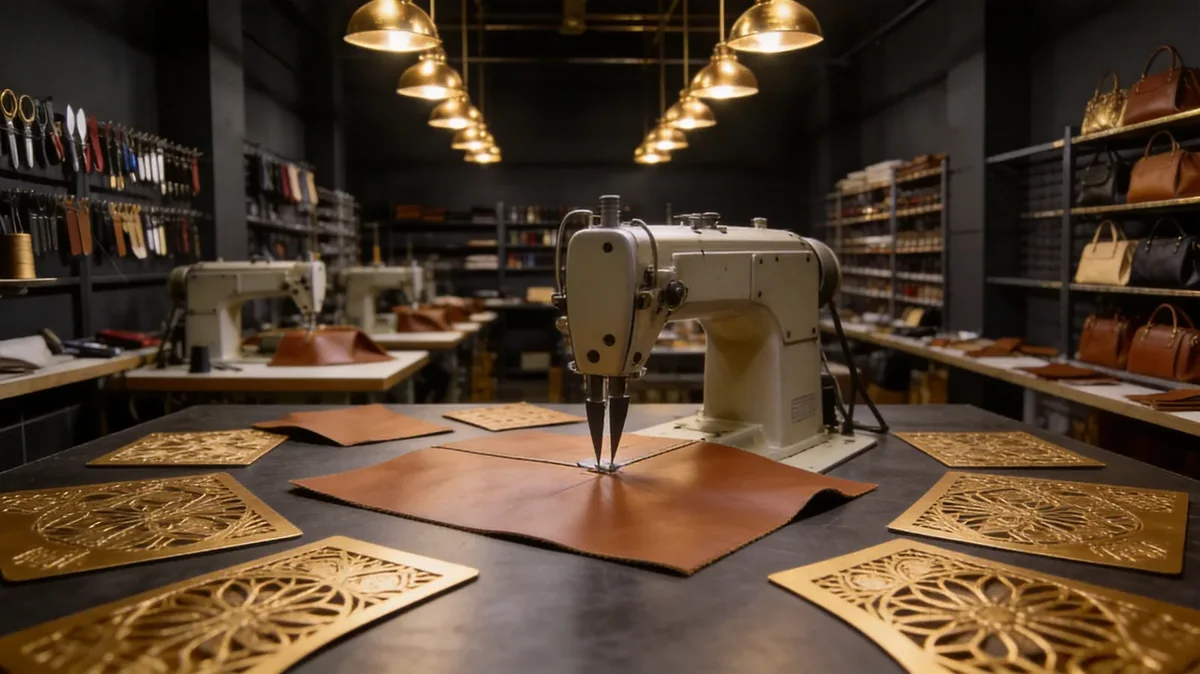
What Quiet Demand for Artisan Work Actually Means
Demand for artisan work rarely arrives as a request. A buyer does not walk into a showroom and ask for hand-finished edges by name. What happens instead is that she stops responding to the things that used to work — the seasonal logo, the trend silhouette, the promise that a line will be available in three weeks — and starts asking questions the house has to answer with specifics.
Those questions are consistent enough to be treated as a specification. Where did the hide come from, and will that tannery still hold the finish next year? Who built the edge, and how many coats did it take? Was the closure cast for this house, and what happens when the mould wears out? Every one of them has a documented answer in a workshop that takes craft seriously, and none of them has one in a line that was assembled from a catalogue.
The commercial consequence is that artisan demand favours houses with an archive over houses with a campaign. A quiet buyer is not persuaded by a season; she is persuaded by a three-year-old bag that still looks right. That is why the demand is slow to appear in sales data and fast to appear in re-order patterns, and why it rewards houses that can hold a specification rather than chase a trend.
The Signals Buyers Send Instead of Asking
| Signal | What it looks like | What it requires from the workshop |
|---|---|---|
| Longer consideration | Customer handles the bag twice before buying | Edge and lining that survive close inspection |
| Archive questions | Asks how a three-year-old piece has aged | Vegetable-tanned trims and recorded finishes |
| Origin questions | Asks where the hide came from | Tannery lot recorded with the order |
| Repair questions | Asks whether a strap can be replaced | Pattern file and edge formula held on file |
| Indifference to marks | Does not mention the logo at all | Construction carrying the value instead |
| Patience on delivery | Accepts a wait for a made-to-order piece | A quoted window the house actually holds |
Checklist: What Genuinely Counts as Artisan Work at 500 Pcs
Artisan is a word that has been used loosely enough to need a definition. The following list is the working test applied in a workshop that runs structured calfskin at volume. A piece qualifies when most of these are true of it, and it does not qualify when they are absent however the line is described.
- The edge is built by hand in three coats to a recorded weight formula, sanded between coats, not sprayed in one pass.
- Stitching runs at 8-9 stitches per inch with bonded Tex 40 thread, checked at the start of every shift.
- Panels are skived and folded by hand at the corners rather than pressed flat by a machine.
- The hide is selected panel by panel, with the grain direction matched across the body and the flap.
- Hardware is either custom-cast for the house or hand-set, and every lot carries a plating reading.
- The lining is cut and set by hand so it sits flat with no puckering at the pocket mouth.
- A named bench, not a station, is responsible for the finished unit, and the unit is signed off against a sealed reference.
The last item is the one that separates a real programme from a description. Hand work at volume is only possible when responsibility is attached to a person who can be asked about a specific bag. That is what makes 500 pcs per colourway the natural unit: large enough to be a production run, small enough that a bench can still be accountable for what comes off it.
Where Hand Work Sits in a Modern Line
Not every operation benefits from a hand. The discipline is knowing which ones do, because a line where everything is hand-worked is not more luxurious, it is merely slower and less consistent. The table below separates the operations where a bench adds value from the ones where a machine does the job better.
| Operation | Hand or machine | Why |
|---|---|---|
| Edge finishing | Hand | Three coats with sanding between; a machine pass leaves a ridge |
| Corner skiving | Hand | Grain direction and fold differ on every panel |
| Panel selection | Hand | Grain and scar placement have to be judged per hide |
| Straight seam stitching | Machine | Consistent tension at 8-9 SPI; a hand cannot hold it across 500 pcs |
| Splitting to substance | Machine | Substance held at 1.2-1.4 mm needs a calibrated roller |
| Hardware setting | Hand | Alignment within 0.5 mm of the flap axis |
| Final inspection | Hand | Shade and edge judged against the sealed sample in a D65 booth |
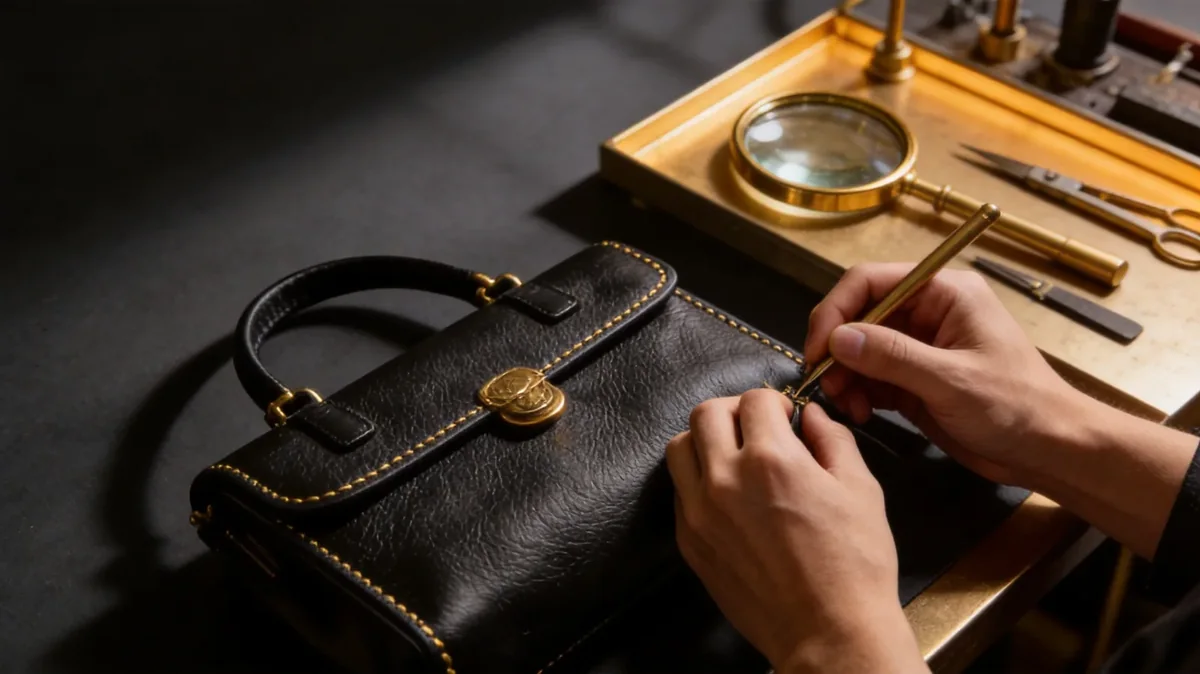
Materials an Artisan Programme Requires
Hand work amplifies material rather than compensating for it. A bench can make a mediocre hide look acceptable for a photograph, and it cannot make one survive three years of handling. The material set below is what a serious artisan programme specifies before the first cut.
- Full-grain calfskin at 1.2-1.4 mm for structured bodies, 0.9-1.1 mm where the silhouette should slouch.
- Vegetable-tanned trims and handles that darken with use, so the piece records its own history.
- Matte or semi-matte finishes; a sprayed high gloss reads as film and hides the grain a buyer came to see.
- Cotton twill or microsuede linings, colour matched to the panel rather than contrasted against it.
- Bonded Tex 40 thread at 8-9 SPI in a tone one shade darker than the leather.
- Hardware in brass or zamak, plated at 0.15-0.3 µm from a single recorded bath, sealed on top.
- Edge paint mixed to a weight formula in the panel colour, with the formula filed against the style.
Proving Craft: The Documents That Back the Claim
A claim of artisan work is worth little without the file behind it. What follows is the pack a workshop should hand over at the end of a drop. It is not marketing material; it is the set of records that lets a house answer the questions quiet buyers ask, and it travels with the order rather than being produced on request.
Sealed reference
One golden sample per style and colourway, signed by both sides, held by the house and by the workshop, arbiter of every later drop.
Tolerance ledger
Substance, stitch density, edge build, closure alignment and shade deviation written before bulk cutting starts.
Material certificates
Tannery lot, alloy and plating bath recorded, with REACH Annex XVII and Prop 65 declarations attached to the order.
Inspection record
Final inspection at AQL 2.5 under ISO 2859-1, with the sealed sample as the reference for shade and edge.
Capacity: How Hand Work Survives Scale
The objection to artisan work at volume is consistency, and it is a fair one. A hand-built edge varies more than a sprayed one, and the question is whether the variation stays inside a band a customer cannot detect. The answer is a set of checkpoints rather than a hope: the figures below are the working controls on a line that runs hand-finished work at production volume.
These controls exist because hand work is measurably variable, not because it is unreliable. A bench that knows the tolerance will hold it; one that has never been told the number will drift slowly enough that nobody notices until a re-order arrives and the two drops no longer match.
Costing an Artisan Capsule
- MOQ
- 500 pcs per style and colourway
- Sampling
- 6-10 working days, 12-15 for frame or exotic work
- First bulk
- 35-50 days from approved sample
- Re-order
- 28-35 days against a sealed reference
- Trim bill
- About USD 4.80 per piece for zip, feet and plated trim set
- Plating
- 0.15-0.3 µm from a single recorded bath
- Incoterm
- FOB Xiamen
The trim figure is worth dwelling on because it explains why artisan work is within reach at this level. A #5 metal zip, four base feet and a plated trim set come to about USD 4.80 per piece in parts. The hand work that turns those parts into a bag is where the cost sits, and it is also where the value a quiet buyer is paying for actually lives.
Checklist Before You Commit to an Artisan Capsule
- Ask to see a sealed reference from a running style and the tolerance ledger that goes with it.
- Ask which operations are hand and which are machine, and why; a house that says everything is hand-worked is describing a workshop that cannot scale.
- Confirm the tannery lot is recorded and that a named alternative finish is approved in advance.
- Confirm every hardware lot carries a plating reading, and that spare parts ship at 2% of unit quantity.
- Ask how the edge formula is recorded and who holds it, since a repair programme depends on that file.
- Confirm the inspection level and the standard: AQL 2.5 under ISO 2859-1, measured against the sealed sample.
- Agree the re-order window and the variance band before the first drop, not after it ships.
Ask to hold a bag from the current drop next to one from two seasons ago. If the edge, the shade and the closure match, the craft claim is real and the programme is controlled. If they do not, no amount of workshop language will make the line artisan — the house is buying a description rather than a discipline.
Specify an artisan capsule that can be repeated
If you are planning a hand-finished line, send the silhouette, the finish shortlist and your target quantity per colourway. Our team will return a tolerance ledger and a sampling plan through our quotation desk.
What artisan production looks like in practice
- Across 7 production lines running about 200,000 pcs per month, hand work is concentrated where it changes the result: edge, skiving, panel selection, hardware setting and final inspection. Shade is held at ΔE ≤ 1.0 under D65, plating at 0.15-0.3 µm, and every drop is inspected at AQL 2.5 under ISO 2859-1. Export experience since 2014 and a 28-35 day re-order window are what let a quiet line be repeated rather than reinvented.
Frequently Asked Questions
What does artisan made mean for a handbag?
It means the operations that change how a bag feels are done by hand to a recorded specification: edge built in three coats with sanding between, corners skived and folded by hand, panels selected for grain direction, hardware hand-set within 0.5 mm. Straight seams and splitting stay on machines because they need consistent tension and calibrated substance.
Why is demand for artisan bags described as quiet?
Because it is expressed as indifference rather than as a request. Buyers stop responding to seasonal logos and trend silhouettes and start asking where the hide came from and how the edge was built. That shift shows up slowly in sales data and quickly in re-order patterns, which is why it is easy to miss until a season has passed.
Can hand work be consistent across 500 pieces?
Yes, when the tolerance is written and checked. Shade at ΔE ≤ 1.0 under D65, stitch density at 8-9 SPI checked at every shift start, closure alignment within 0.5 mm, and final inspection at AQL 2.5 under ISO 2859-1. Hand work varies more than a machine pass; the discipline is keeping the variation inside a band no customer can detect.
Which operations should stay on a machine?
Straight seam stitching and splitting to substance. A machine holds tension consistently across a full run and a calibrated roller holds substance at 1.2-1.4 mm in a way a hand cannot. Craft at volume is a division of labour, and a line where everything is hand-worked is slower and less consistent rather than more luxurious.
How much does hardware cost on an artisan bag?
Around USD 4.80 per piece in parts for a #5 metal zip, four base feet and a plated trim set. That is a modest figure next to the leather and the bench time, which is precisely why specifying the hardware properly is worth doing. The difference between a stock clasp and a custom-cast one is marginal at this scale.
What documents should a workshop provide?
A sealed golden sample per style and colourway, a tolerance ledger recording substance, stitch density, edge build and shade deviation, material certificates naming the tannery lot and alloy, and a final inspection record at AQL 2.5 under ISO 2859-1. That pack is what lets a house answer origin and repair questions without going back to the workshop.
How do you keep leather consistent for hand-built bags?
Specify the finish by tannery and batch, seal a reference, and measure each new lot in a D65 light booth at ΔE ≤ 1.0. Approve a named alternative finish in advance so a discontinuation does not force an unplanned change. Because panels are selected by hand for grain direction, the selection rule has to be written as well.
What is the minimum order for an artisan capsule?
500 pcs per style and colourway. That is large enough to be a genuine production run and small enough that a named bench stays accountable for what comes off it. Sampling runs 6-10 working days, extended to 12-15 for frame work or exotic skins, and the first bulk ships 35-50 days from the approved sample.
How long does a re-order take on a hand-finished line?
28-35 days when a sealed reference and a live tolerance ledger are on file, against 35-50 days for a first order. The saving comes from material and hardware approvals already being recorded, not from rushing the bench. Re-orders are inspected at the same level and against the same sealed sample.
How should a brand test an artisan claim?
Hold a bag from the current drop beside one from two seasons ago under daylight. If the edge, the shade and the closure match, the programme is controlled. Also ask which operations are hand and which are machine: a house that says everything is hand-worked is usually describing a workshop that cannot repeat the result.
What repair support should an artisan programme include?
Spare hardware at 2% of unit quantity, matched thread held against the style, and the pattern file and edge paint formula kept on record so a panel or strap can be replaced rather than the whole bag. Repair work is usually run between drops to keep the main line free.
Does artisan work justify a higher price?
Only when the customer can detect it. A three-coat edge, a hand-set closure and a matched grain direction are all felt at arm's length, and those defend a price. Hand work the customer cannot see or feel is a cost without a return, which is why the division between hand and machine operations matters commercially.
People Also Ask
What makes a handbag artisan made?
Hand-built operations that change how the bag feels: an edge in three sanded coats, corners skived and folded by hand, panels selected for grain direction and closures hand-set within 0.5 mm. Each is done to a written tolerance and checked against a sealed reference sample.
Why are artisan bags more expensive?
Because bench time replaces machine time on the operations where it matters. The parts themselves are modest — a zip, feet and a plated trim set come to about USD 4.80 per piece — so the added cost sits in the hours a named bench spends on the edge, the corners and the setting.
Is handmade the same as hand-finished?
No. Hand-finished means specific operations are done by hand while seams and splitting stay on machines for consistency. Truly handmade usually implies one bench making one bag, which is a different proposition from a 500-piece capsule and is priced and planned differently.
How can you tell real craft from a marketing claim?
Ask for the tolerance ledger and a sealed reference from two seasons ago, then compare them in daylight. Real programmes produce documents and matching drops; claims produce adjectives. Ask which operations are machine and why — a considered answer is itself a signal.
Do artisan bags last longer?
They tend to, because the operations that fail first are the ones done by hand: the edge, the corner fold and the hardware setting. Three sanded coats outlast one sprayed pass, and a hand-set closure aligned to the axis puts less strain on the flap.
Sources and further reading
Every figure on this page is either our own programme data or attributed below. Open the originals before you write them into a specification.
- ISO — International StandardsInternational Organization for Standardization Publisher of ISO 2859-1 sampling procedures and ISO 105-X12 colour fastness methods used on hand-finished drops.
- Leather Working GroupLeather Working Group Tannery audit protocol referenced when a programme names a hide source that must stay available across drops.
- Understanding REACHEuropean Chemicals Agency Annex XVII substance restrictions applying to leather finishes, edge coatings and plated hardware.
- Proposition 65California OEHHA Substance and warning requirements for handbags and metal hardware placed on the California market.