Luxury Handbag Programme for Small Batch Drops: Six Questions, Answered in the Order They Are Asked
Can a luxury handbag programme produce genuinely small drops? Yes, but not below 500 pcs per style and colourway, and not by asking for an exception to that floor. The workable route is structural: one pattern released in colourway waves, or a family of silhouettes sharing a hardware platform so tooling amortises across all of them. Drops then run on a 6-8 week cadence with bulk of 35-50 days per wave and sampling of 6-10 working days. Below, the six questions founders ask about drop programmes, answered in the order they are usually asked.
Question One: Can a Drop Actually Be Small?
Yes, and the definition matters. A drop is small relative to a season, not relative to a bench. The floor is 500 pcs per style and colourway, because below that figure no tooling can be amortised sensibly and no hide lot can be reserved at a stable shade. What makes a programme feel like a series of drops rather than one large season is cadence and variety, not a lower number on any single line.
The distinction is worth holding onto, because it changes what you ask for. Asking for 150 pieces of one style produces either a refusal or a quotation with the development cost spread so thinly that the unit figure looks absurd. Asking for 500 pieces of one style in three released waves produces a programme that reads as scarce and costs almost nothing extra.
Question Two: Where Does the 500-Piece Floor Actually Bite?
It bites on tooling and on material lots, and nowhere else. A bespoke closure die, an emboss plate and a graded pattern set are all charged once, and each needs a run long enough to spread across. A hide lot is reserved as a lot, and a lot small enough to be cut in a morning will not hold shade consistently across the panels that follow.
- Bespoke closure die
- Charged once; its per-unit share falls with every subsequent wave on the same part
- Emboss or deboss plate
- Charged once, then held for re-orders of the same finish
- Graded pattern set
- Charged once per silhouette; each extra proportion shifts panel area by roughly 8%
- Hide lot reservation
- A lot has to be large enough to hold shade across the whole drop
- Compliance testing
- Issued against a lot, so more lots mean more reports, each with its own calendar days
- Practical floor
- 500 pcs per style and colourway, the point at which all five lines above begin to spread
Notice that three of those six lines are charged once per style rather than per unit. That is the whole economic argument for a family rather than a series of one-offs: the fixed lines are paid once and the waves ride on top of them.
Question Three: How Do You Split 500 Pieces Across a Drop?
Three structures work, and each produces a different feel at retail. Choosing between them is the single most consequential decision in a drop programme, because it fixes both the cost structure and the story the customer is told.
| Structure | How it works | What it gives you | What it costs |
|---|---|---|---|
| Colourway waves | One pattern, 500 pcs per colourway, released 6-8 weeks apart | Scarcity with a single development line | One pattern, several lots, several compliance reports |
| Silhouette family | Three silhouettes sharing one closure platform and one leather lot | A collection feel with shared tooling | Three patterns, one die, one hide lot |
| Size waves | One pattern graded across two proportions, released together | Inclusive sizing without a second development | One graded set, one lot, one report |
Colourway waves are the most popular with young maisons for a simple reason: one pattern carries the entire programme. The second colourway costs material, labour and a lab dip, and it carries no development line at all, which makes it the most efficient unit of growth available.
Question Four: What Does a Drop Calendar Look Like?
A drop programme is a calendar problem before it is a design problem. Each wave carries sampling of 6-10 working days, bulk of 35-50 days, and inspection plus packing of a further three to five. Set end to end, a single wave occupies roughly two and a half to three months, so waves are overlapped rather than run in sequence.
- Wave one opens with sampling of 6-10 working days on the first colourway.
- Material for wave two is reserved while wave one is in bulk, since reservation carries no design risk.
- Wave one ships; wave two enters sampling on the frozen pattern, which shortens its development window.
- Waves three and onward repeat the pattern of wave two, each on a frozen pattern and a named lot.
- A cadence of 6-8 weeks emerges naturally from that overlap rather than being imposed on it.
The overlap at step two is the mechanism. Reserving a lot before the previous wave ships costs nothing in design flexibility and removes the longest waiting period in the whole calendar, which is what makes a 6-8 week cadence achievable at all.
Question Five: How Do You Keep a Drop Feeling Scarce?
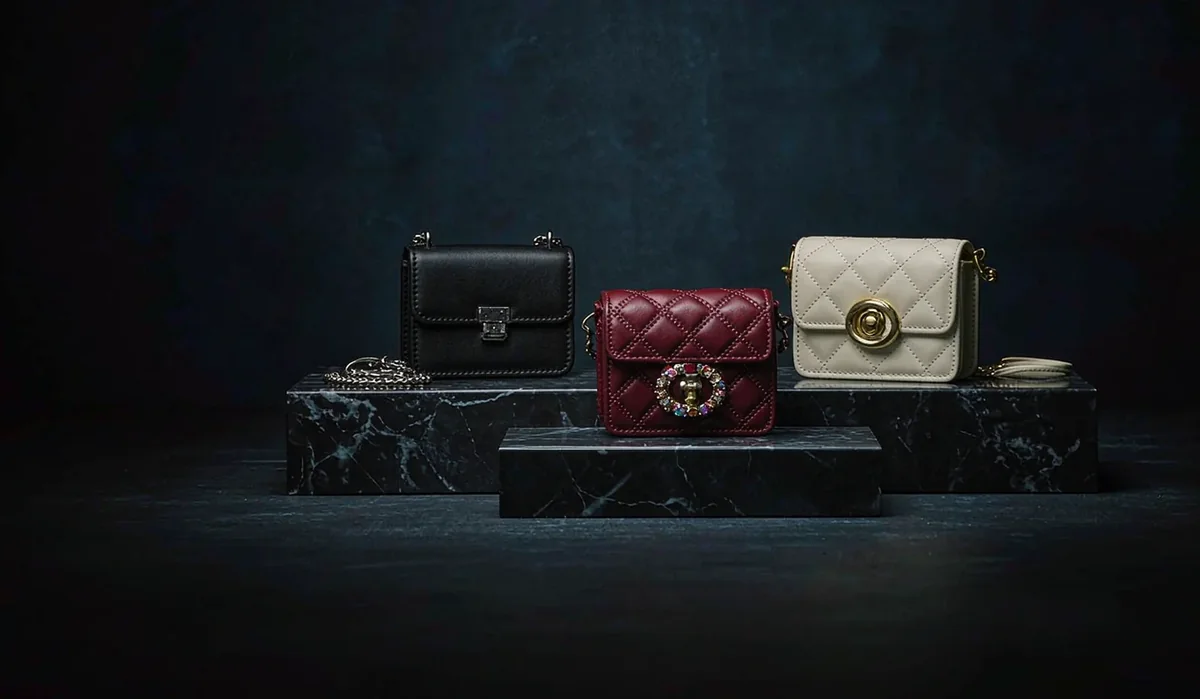
Scarcity is produced at the point of release, not at the bench. Three devices do the work, and none of them requires producing fewer pieces than the floor allows: numbered interior plates, a colourway released once and not repeated, and a hardware finish held for a single season.
Numbered interior plate
A struck or etched plate carrying the unit number within the wave. It costs a single tooling item and turns a production run into an edition without changing quantity.
Single-release colourway
A shade dyed for one wave and not repeated. The lab dip of 7-10 days is the only added cost, and the colourway never returns to the range.
Season-exclusive hardware finish
A plating finish used for one season only, at 0.15-0.3 µm. The die stays; the finish changes, which is the least expensive way to make a second wave feel different.
Documented edition size
Stating the wave quantity honestly on the card that ships with the bag. Scarcity claimed without a number is marketing; scarcity with a number is a fact a customer can verify.
The fourth device is the one brands skip, and it is the one that costs nothing. A stated edition size is verifiable, and a customer who can verify a claim is a customer who believes the next one.
Question Six: What Breaks When Drops Get Frequent?
Consistency breaks first, and it breaks quietly. When waves arrive every six weeks, the risk is no longer that one bag is wrong; it is that wave four's calfskin sits half a shade away from wave one's, or that the edge build drifted from 0.45 mm to 0.35 mm without anyone deciding it had.
- Shade drift between lots: held at a Delta E at or below 1.5 against the original sealed swatch, not against the previous lot.
- Edge build drift: measured each wave at 0.35-0.45 mm over three coats rather than assumed from the last one.
- Hardware finish drift: plating read each season at 0.15-0.3 µm, since a plating bath changes as it ages.
- Bench variation: stitch density counted at 8-9 per inch on every wave rather than at launch only.
- Document sprawl: each lot generates its own reports, so the file grows one set per wave.
The discipline is to measure every wave against the original reference rather than against the previous wave. Measuring against the previous wave permits a slow walk away from the specification, and by wave four nobody can say where the drift began.
Materials and Colourways Across a Wave Programme
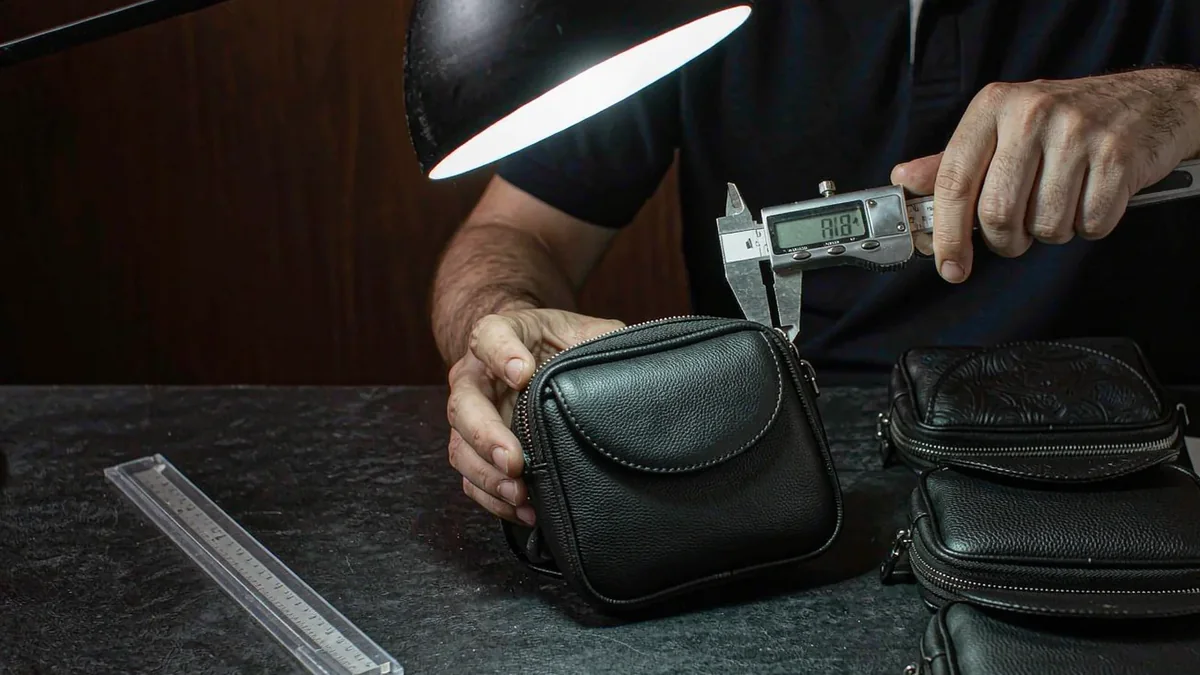
Material planning for a drop programme is different from planning a single season, because each wave is its own lot with its own reports. Full-grain calfskin at 1.2-1.4 mm is the practical reference, and the useful habit is to reserve the whole season's requirement against one tannery run where the grade allows it.
- Reference shell material
- Full-grain calfskin, 1.2-1.4 mm, read at five points per skin
- Shade tolerance across waves
- Delta E at or below 1.5 under D65 against the original sealed swatch
- New colourway lead time
- 7-10 days for a lab dip, plus around 3 days for the strike-off
- Listed skins in a wave
- Permit documents are issued per shipment, so they sit outside the wave calendar
- Compliance per wave
- REACH Annex XVII and California Prop 65 declarations issued against each lot
Reserving the season against one tannery run is the single biggest simplification available. It converts several shade-matching exercises into one, and it means the whole range shares a lot reference that a laboratory report can be issued against once.
Sampling Across Several Waves
The first wave carries the full development: technical pack, pattern, toile, and a sampling round of 6-10 working days, or 12-15 where a bespoke closure or a framed body is involved. Every wave after that rides on a frozen pattern, so its sampling window covers confirmation of material and shade rather than development of geometry.
| Stage | Wave one | Waves two and onward |
|---|---|---|
| Technical pack | 3-5 days from the brief | Already frozen, only colourway notes added |
| Pattern and toile | 2-3 days, often two toiles | None, the pattern is held |
| Sampling | 6-10 working days, or 12-15 for complex builds | Confirmatory round on the frozen pattern |
| Material reservation | 15-20 days for a named lot | Already reserved against the season |
| Bulk | 35-50 days from intake | 35-50 days, unchanged |
| Inspection and packing | 3-5 days including corrections | 3-5 days, with the previous wave's findings closed out |
That concentration is the argument for committing to a pattern you intend to keep. The development cost is paid once, and every subsequent wave is mostly material and bench time.
Quality Consistency Between Waves
Each wave is drawn at AQL 2.5 under ISO 2859-1 at general inspection level II, so a 500 pcs wave uses code letter H: 50 units drawn, accept 3, reject 4. The plan is identical wave to wave, which is precisely what makes the results comparable, and the findings from one wave should be written into the next as specification changes rather than as corrections.
Keep the original approval sample and the original swatch card, stored away from light, for the life of the programme. Waves measured against their own predecessor drift; waves measured against the original do not.
Third-party inspection can be added where a retailer requires an independent draw. It is most useful on the first wave, when neither side has a shared history of what counts as acceptable, and it becomes less necessary once the defect classification is written and agreed.
When a Drop Programme Stops Making Sense
There is a point at which wave structure costs more than it returns, and it usually arrives when the number of live lots exceeds what one compliance calendar can absorb. Every lot generates its own declarations and, where shades are pale, its own fastness report, and those reports have their own calendar days.
- More than six live colourways at once: report sprawl begins to dominate the calendar.
- A different closure on every wave: tooling never amortises and each wave pays a development line.
- Waves shorter than the bulk run: the calendar collapses into a queue rather than a cadence.
- A listed skin on alternating waves: permit documents arrive on an authority timetable that ignores your cadence.
- Re-orders outnumbering new waves: at that point you have a range, and it should be planned as one.
The last item is a success signal rather than a failure. When re-orders dominate, the drop programme has done its job: it found the silhouettes worth keeping, and those are worth planning as a standing range with a held pattern and a named lot.
Our validated partner factory Quanzhou Yingming Bags, an SGS-validated site, has run export programmes since 2014 across 7 production lines at about 200,000 pcs per month, on FOB Xiamen terms. Documentation handling is quoted from USD 4.80 per lot file, which matters more in a wave programme than anywhere else, because the file count scales with the waves.
Plan your first three waves on one calendar
Send your silhouette, your colourway plan and the cadence you want to hold. You will receive a wave calendar with every material reservation, sampling window and bulk run marked, plus the tooling that amortises across all of them. Request a quote.
Frequently Asked Questions
Can I order fewer than 500 pieces for a first drop?
Not on a per-style and per-colourway basis. Below 500 pcs the tooling cannot be amortised sensibly and a hide lot cannot be reserved at a stable shade. The workable alternative is to produce 500 and release it in waves, which gives the same scarcity at retail without breaking the floor.
What is the smallest programme a new maison can realistically run?
One silhouette in one colourway at 500 pcs, then a second colourway on the same pattern. The second colourway carries material, labour and a lab dip but no development line at all, which makes it the most efficient unit of growth available to a young maison.
How many colourways should a first drop have?
Two or three at most. Each colourway is its own lot with its own compliance declarations and, where shades are pale, its own fastness report. Beyond about six live colourways, report sprawl begins to dominate the calendar more than the design work does. Start with two and add more only once the cadence is holding.
How often can drops realistically ship?
Every six to eight weeks once the programme is running, because waves overlap rather than queue. A single wave occupies roughly two and a half to three months end to end, so the cadence comes from starting the next reservation before the current wave ships.
Does a second colourway cost as much to develop as the first?
No. Pattern making, tooling and the technical pack are charged once per style and per part. A second colourway on an existing body adds material, bench time and a lab dip of 7-10 days, and carries none of the development cost of the first, which makes it the most efficient unit of growth available.
How do I keep drops feeling scarce without producing fewer?
Use release devices rather than quantity: a numbered interior plate, a colourway released once and never repeated, and a hardware finish held for a single season. Stating the wave quantity honestly on the card is the one that costs nothing and is verifiable, and none of the three requires producing fewer pieces than the floor allows.
How long does each wave take from approval to shipping?
Bulk runs 35-50 days from approval, with inspection and packing adding three to five. Sampling takes 6-10 working days on a new build and less on a frozen pattern, since confirmation of material and shade replaces development of geometry. A wave on a held pattern therefore reaches the bench sooner without being rushed.
What causes shade differences between waves?
Different hide lots. Each lot carries its own shade, which is why every wave should be read at a Delta E at or below 1.5 against the original sealed swatch rather than against the previous lot, which permits a slow walk away from the specification.
Is inspection the same on every wave?
Yes: AQL 2.5 under ISO 2859-1 at general inspection level II. A 500 pcs wave uses code letter H, meaning 50 units drawn, accept 3, reject 4. Identical plans are what make results comparable, so findings can be written into the next wave as specification changes.
Can exotic skins be used on a drop programme?
Yes, but they sit outside the cadence. Species listed in the CITES appendices need permit documents issued per shipment by an authority working to its own timetable, so a listed skin on alternating waves introduces a variable the calendar cannot absorb. Reserve the permit step before the wave is scheduled at all.
What happens if a wave sells out early?
A re-order on a frozen pattern and a named lot is the fastest route, because there is no development line and the material may already be held. That is the situation in which a drop programme has worked: the silhouette has proved itself and is worth planning as a standing range.
How does documentation scale across waves?
One set per lot rather than one per style, so the file grows with every wave. Documentation handling is quoted from USD 4.80 per lot file and covers assembly of the declarations, reports and audit sheets that travel with each shipment. Plan the file count alongside the wave count when you set the cadence.
Should each wave use a different closure?
Rarely. A different closure on every wave means tooling never amortises and each wave pays a development line. A better device is to keep the die and change the plating finish, which gives a distinct look at a fraction of the cost, and the saving compounds with every wave that follows.
When should a drop programme become a standing range?
When re-orders outnumber new waves. At that point the silhouettes worth keeping have been identified, and the efficient structure is a held pattern with a named lot planned as a range rather than as a series of releases. Development then stops appearing on the quotation altogether, which is the clearest signal that you have arrived.
People Also Ask
What is the minimum for a small batch handbag drop?
500 pcs per style and colourway. Scarcity is created by releasing that quantity in waves, or by numbering the units, rather than by producing below the floor where tooling and lot reservation stop working.
How do you make a handbag drop feel limited?
With release devices: a numbered interior plate, a colourway released once, and a season-exclusive plating finish. Stating the edition size honestly is free and verifiable, which is what makes the next claim credible.
How often should a brand release new handbag drops?
Every six to eight weeks once the programme is running. The cadence comes from overlapping waves and reserving the next lot early, not from shortening the 35-50 day bulk run.
Does a second colourway need new sampling?
It needs a confirmatory round on the frozen pattern rather than a full development round. Geometry is already settled, so the window covers material, shade and finish rather than shape.
Why do colours vary between handbag production runs?
Because each run uses a different hide lot, and a lot carries its own shade. Reading each run against the original sealed swatch at Delta E at or below 1.5 keeps variation inside an agreed band.
Sources and further reading
Every figure on this page is either our own programme data or attributed below. Open the originals before you write them into a specification.
- ISO — International Organization for StandardizationISO Publisher of ISO 2859-1, which sets the AQL 2.5 plan and code letter H used to draw 50 units from each 500 pcs wave.
- CITES Appendices I, II and IIICITES Listing that determines when permit documents are required per shipment, the reason listed skins sit outside a fixed wave cadence.
- Leather Working GroupLeather Working Group Tannery audit protocol referenced when a season is reserved against one tannery run, which is what keeps shade stable across waves.
- REACH legislation (European Chemicals Agency)ECHA Annex XVII declarations are issued per lot, which is why the document file grows by one set for every colourway wave.
- WWDWWD Reporting on drop and capsule release strategies across the luxury market, including cadence and scarcity devices used by maisons.