Working With a Premium Handbag Manufacturer Remotely: Six Questions Buyers Ask, Answered in Order
Can a premium handbag be developed without ever visiting the bench? Yes, provided four artefacts travel instead of you: a signed and halved swatch card, a 12-frame photograph set shot at 4000 px with a scale bar in the macro frames, a continuous 90-second video walkaround, and written notes issued within 24 hours of every call. Colour is agreed as a number, ΔE ≤ 1.5 against the signed master under D65, rather than as an impression. What still deserves a visit is the first article inspection and any bespoke hardware proving. The six questions below follow the order buyers actually ask them.
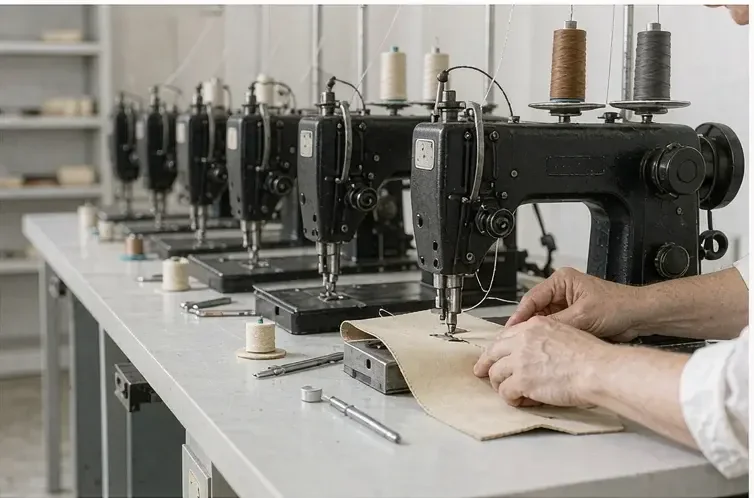
First: What Actually Has to Travel Between You and the Bench?
Very little physically travels in a remote programme, and that is the point. What moves instead is information: a technical pack with tolerances, a signed swatch card, a measured sample record and a written correction list. Leather, hardware and thread travel once, in one direction, when the lot is reserved.
The failure mode in remote work is not distance but ambiguity. A brief that says soft tan reads differently in Milan, Shanghai and Quanzhou, whereas a brief that names a hide, a substance of 1.2-1.4 mm, a temper and a signed reference card does not need a meeting to be understood.
That is also why the first week of a remote programme is slower than the third. The first week is spent converting adjectives into numbers; once the pack carries substance, tolerances, colour values and a lot identity, the following weeks run on correspondence alone and the calendar stops slipping for reasons nobody can quite name.
| What has to be agreed | How it travels | How often | How it fails remotely |
|---|---|---|---|
| Colour | Halved swatch card, signed and dated, measured at ΔE ≤ 1.5 under D65 | Once per lot, then re-checked per bulk intake | Screen calibration and monitor colour temperature |
| Hand feel and temper | Cut swatch plus a stated substance, 1.2-1.4 mm structured, 0.9-1.1 mm soft | Once per material | Photographs cannot carry temper or drape |
| Geometry | Dimensioned pack with tolerances, plus a 1:1 pattern plot | Once per style, revised after each round | Verbal descriptions of proportion |
| Construction | Stitch density 8-9 per inch, skive 8-10 mm, edge build of three coats | Once, written into the pack | Left to the bench by default |
| Progress | Weekly written notes within 24 hours of each call | Weekly during sampling, fortnightly in bulk | Updates given only when asked for |
How Do You Judge Leather Without Touching It?
You judge it by substance, temper and lot identity rather than by feel: a stated thickness in millimetres, a stated temper, a named tannery lot and a physical swatch cut from that lot and sent to you. Temper is the one property that resists remote judgement, which is why the swatch card and the finished sample still travel by courier.
- Ask for substance rather than weight: 1.2-1.4 mm for a structured body, 0.9-1.1 mm for a soft one.
- Ask for the lot number, the tannery and the finish type, so a re-order can be matched later.
- Ask for a cut swatch from the reserved lot, not a generic card from a previous season.
- Ask for the finish adhesion result against ISO 11644 before approving a coated or corrected grain.
- Ask what happens if the lot is exhausted mid-run, because substitution is the commonest remote dispute.
A Copenhagen buyer approved a hide from photographs and discovered at delivery that the temper was firmer than the reference. The fix was not better photography; it was agreeing substance and temper as written numbers and couriering a swatch from the exact lot before any panel was cut.
How Do You Judge Hardware Without Holding It?
Hardware is judged remotely through three documents rather than one: a dimensioned drawing with tolerances, a plating specification in microns, and a cycle test result. Weight and closing sound are the two properties that genuinely need a hand on them, so a couriered sample remains worth the wait for any bespoke closure.
- Plating thickness
- 0.15-0.3 µm, stated by finish, verified by 24-hour neutral salt spray
- Cycle test on a turn-lock
- Opened and closed on the bench before panels are cut, then again after fitting
- Photograph set per sample
- 12 frames at 4000 px on the long edge, 4 overall, 8 macro with a scale bar
- Video walkaround
- One continuous 90-second take, no cuts, closing and opening shown twice
- Courier transit
- 3-4 working days to most European destinations, 4-5 to North America
- Colour tolerance
- ΔE ≤ 1.5 against the signed master, measured under D65
Those six parameters turn an impression into a specification. A photograph can tell you a lock looks right; only a stated plating thickness and a cycle count tell you it will still look right after a season of use, which is the period your client will actually judge it over.
One further document is worth requesting for any closure that carries load: the pull test result on the strap anchor and the feet. These are the two points where a luxury handbag fails in service, and neither is visible in a studio photograph, however carefully the piece is styled for it.
What Does a Remote Approval Actually Sign Against?
A remote approval signs against three artefacts: the corrected sample, the photograph set of that exact sample, and the written correction list from the previous round. If any one of the three is missing, what is being approved is a memory, and memories diverge across time zones.
Three artefacts every remote approval needs
- The corrected sample itself, couriered, with its own serial record and measurement sheet.
- The 12-frame photograph set of that exact piece, not of an earlier build.
- The previous correction list, with each line marked closed or carried forward.
- A stated colour result, ΔE ≤ 1.5 against the master, measured under D65 lighting.
- A named version number, so nobody is approving a piece that has since been revised.
Version numbering sounds pedantic until the day two revised samples are in transit at once. Then it is the only mechanism that tells you which one your signature refers to, and it costs nothing to add at the time it matters most.
One discipline makes the whole approval chain hold together: nothing is approved verbally. A message saying the sample looks good is not an approval, because it does not say which sample, at which version, against which measurements. Written approvals referencing a version number take a minute longer and remove the ambiguity that causes most remote disputes.
How Do Corrections Work When Nobody Is in the Room?
Corrections work remotely when they are written as numbered lines with a measurement and a target, never as adjectives. Raise the handle by 4 mm is actionable across time zones; the handle feels wrong is not, and it typically costs a full round to resolve.
- Write each correction as one numbered line, with the current measurement and the target measurement.
- Photograph the exact area and reference the frame number in the correction line.
- Mark each line closed or carried forward at the next review, in writing.
- Keep the review to a fixed 30 minutes weekly, with notes issued within 24 hours.
- Escalate only lines that change geometry; everything else waits for the next scheduled review.
Where a correction changes the lining rather than the body, the cost lands per unit rather than once. A move from cotton twill to a sueded microfibre, for instance, is quoted at USD 4.80 per unit and applies to every piece for as long as the style runs.
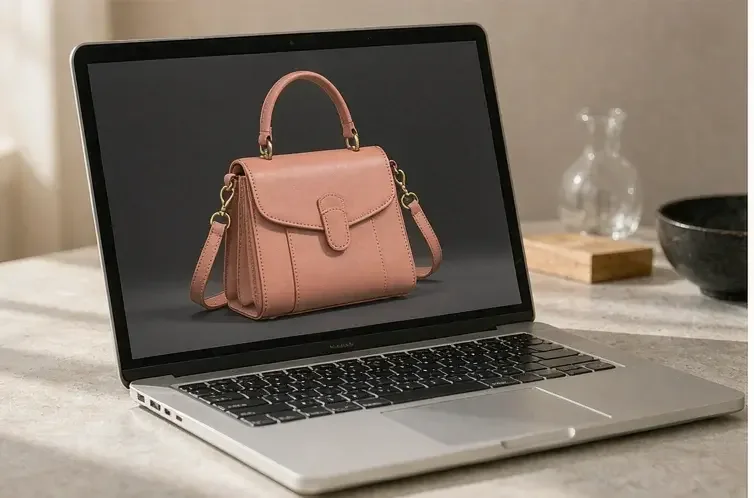
How Is Bulk Tracked Once Sampling Ends?
Bulk is tracked remotely through three fixed reports: intake confirmation when materials land, a mid-run progress note against the agreed calendar, and the inspection result drawn at AQL 2.5 under ISO 2859-1. Anything beyond those three is arguably noise, and asking for daily updates tends to produce daily reassurance rather than information.
- Intake confirmation states the lot number actually received, not the lot that was reserved.
- The mid-run note reports units cut, units closed and any defect trend already visible.
- The inspection result is recorded at AQL 2.5, with code letter and accept and reject numbers stated.
- Third-party inspection can be appointed to attend alongside the internal audit, on your behalf.
- Photographs of packed cartons and documents close the file before the goods leave.
The mid-run note is the one most programmes skip and later regret. A defect trend visible at forty per cent of the run can still be corrected inside the calendar; the same trend discovered at ninety per cent becomes a rework decision, a partial shipment or a conversation with a retailer about a date.
Which Decisions Still Justify Being There in Person?
Two decisions justify travel: the first article inspection on a genuinely new construction, and the proving of bespoke hardware. Both are moments where a hand on the object settles in minutes what a week of correspondence can leave open, and both are early enough that a change is still within reach.
First article on a new construction
Worth attending. This is the first time the pack meets leather, and every correction caught here is cheaper than the same correction at 500 units.
Bespoke hardware proving
Worth attending or receiving by courier. Closing sound, weight and plating uniformity are the three things photography does not carry.
Material lot approval
Can stay remote, provided a swatch from the exact lot is couriered and measured at ΔE ≤ 1.5 under D65.
Final inspection
Can stay remote if a third-party inspector attends and the AQL 2.5 plan was agreed before bulk opened.
Everything else on a remote programme is routine correspondence, and treating it as such is what keeps the calendar intact. Travel is a tool for the two or three decisions where physical judgement genuinely changes the outcome, not a substitute for a written pack.
A Remote Rhythm, Week by Week
Remote work succeeds on cadence rather than intensity. One 30-minute call each week during sampling, one fortnightly through bulk, written notes within 24 hours, and a single named decision owner on each side. That rhythm is what replaces walking across the room, and it is also what protects the calendar when a decision cannot wait.
The single named owner matters more than the frequency of the meetings. Programmes with two decision makers on the brand side tend to answer the same question twice, with slightly different answers, which the bench then has to reconcile before it can cut anything.
The programme runs across 7 production lines with about 200,000 pcs per month of capacity and has held export experience since 2014, carried out through our validated partner factory Quanzhou Yingming Bags, an SGS-validated site. Sampling takes 6-10 working days, or 12-15 on complex builds, and bulk takes 35-50 days on FOB Xiamen terms, with CIF and DDP available on request. MOQ 500 pcs applies per style and colourway.
Set up a remote programme with a written rhythm
Send your drawings and material direction and you will receive a pack template, a swatch card specification and a review calendar for your first capsule. Request a quote.
Frequently Asked Questions
Can a premium handbag be developed entirely remotely?
Yes, for most styles. What makes it work is agreeing colour, substance and construction as written numbers and couriering a swatch cut from the reserved lot. Only two moments genuinely benefit from being there in person: the first article inspection on a new construction and the proving of bespoke hardware, where a hand on the object settles what correspondence cannot.
How is colour agreed without a meeting?
Through a halved swatch card that is signed and dated, with one half retained on each side, and a colour result measured at ΔE ≤ 1.5 against the signed master under D65 lighting. Screens are never used for approval, because monitor calibration and ambient light vary more than the tolerance itself allows.
What should a sample photograph set contain?
Twelve frames at 4000 px on the long edge: four overall views and eight macro details, each macro carrying a scale bar. The set is shot of the exact piece being approved, and it is filed with the correction list, so that later rounds can be compared against the same frames rather than against memory.
Why is a continuous video walkaround required?
Because cuts hide problems. One unbroken 90-second take, showing the closure opening and closing twice, reveals stiffness, misalignment and edge irregularity that a sequence of stills can be styled around. It remains the closest remote equivalent to actually handling the piece on a bench, and it is the artefact most often skipped by teams in a hurry.
How do I describe a correction across time zones?
As a numbered line with a measurement and a target, referencing the frame number that shows it. Raise the handle by 4 mm can be acted on immediately; the handle feels wrong usually costs a whole round, because it has to be translated into a measurement before anyone can work on it.
What is substance and why does it matter remotely?
Substance is leather thickness stated in millimetres, typically 1.2-1.4 mm for a structured body and 0.9-1.1 mm for a soft one. It matters because temper and drape cannot be photographed, so thickness, lot number and a couriered swatch are the only reliable proxies available to a team working at a distance.
How often should a remote programme hold reviews?
Weekly during sampling, in a fixed 30-minute slot with written notes issued within 24 hours, then fortnightly through bulk. Daily updates tend to produce reassurance rather than information, while monthly ones allow a defect trend to run for several weeks before anyone on the brand side sees it.
What reports should I expect during bulk?
Three: an intake confirmation naming the lot actually received rather than the one reserved, a mid-run note reporting units cut, units closed and any visible defect trend, and the inspection result drawn at AQL 2.5 under ISO 2859-1 with the code letter and accept and reject numbers stated in writing.
Can a third party inspect on my behalf?
Yes. Third-party inspection can be appointed to attend alongside the internal audit, provided the AQL 2.5 plan, the general inspection level and the lot size were agreed before bulk opened. Agreeing the plan early is precisely what prevents an argument about accept numbers once goods are finished.
How long does a couriered sample take to arrive?
Roughly 3-4 working days to most European destinations and 4-5 to North America, excluding customs clearance. That transit time is why approvals are scheduled rather than ad hoc, since a sample arriving unannounced tends to sit unexamined for several days on someone's desk before anyone notices it.
What happens if the reserved hide lot runs out?
Substitution becomes necessary, and a new swatch is couriered for approval before cutting continues. This is the most common dispute in remote programmes, which is why the pack should state in writing what happens on lot exhaustion, who approves the replacement and how the calendar is affected.
Does working remotely change the minimum quantity?
No. MOQ 500 pcs per style and colourway applies whether you visit or not. What changes remotely is the approval path: each round adds courier transit on top of the 6-10 working days of bench time, or 12-15 working days where the build is complex or structured.
People Also Ask
What replaces a site visit in a handbag programme?
Four artefacts: a signed and halved swatch card, a 12-frame photograph set with a scale bar in the macro details, one continuous 90-second video walkaround, and written notes issued within 24 hours of every review.
How do you approve leather colour remotely?
By measuring it rather than looking at it. A halved swatch card is signed and dated by both sides, one half retained each, and the bulk lot is measured at ΔE ≤ 1.5 against that master under D65 lighting.
Why do remote handbag approvals go wrong?
Because adjectives travel badly. Without a stated substance in millimetres, a named lot number and a colour tolerance, each side approves a different mental image, and the difference only becomes visible when the finished goods arrive.
Is a video walkaround better than photographs?
It answers different questions. Stills carry proportion and finish detail; a single unbroken take carries stiffness, alignment and closing behaviour, which are the three defects most often missed entirely in remote approval.
When should I still travel to the bench?
For the first article inspection on a genuinely new construction and for bespoke hardware proving. Both are early enough that a correction remains within reach, and both need a hand on the object to be judged properly.
Sources and further reading
Every figure on this page is either our own programme data or attributed below. Open the originals before you write them into a specification.
- ISO — International Organization for StandardizationISO Publisher of ISO 2859-1 for the AQL 2.5 inspection plan and ISO 11644 for leather finish adhesion, both referenced in remote approval packs.
- Leather Working GroupLeather Working Group Tannery audit protocol used when a hide lot is named, which underpins the lot identity recorded in a remote material approval.
- CIE — International Commission on IlluminationCIE Defines the D65 illuminant and the colour difference framework behind the ΔE ≤ 1.5 tolerance used for remote colour approval.
- European Chemicals AgencyECHA Administrator of REACH Annex XVII, which governs substance testing booked per lot and per destination market.
- Sourcing JournalSourcing Journal Reporting on remote sourcing practice, material substitution disputes and freight transit times relevant to distributed programmes.